Photo: Glove off, take photo, glove back on, repeat.
In my world AAA stands for Audax Altitude Award. This time however it stood for Art And Architecture.
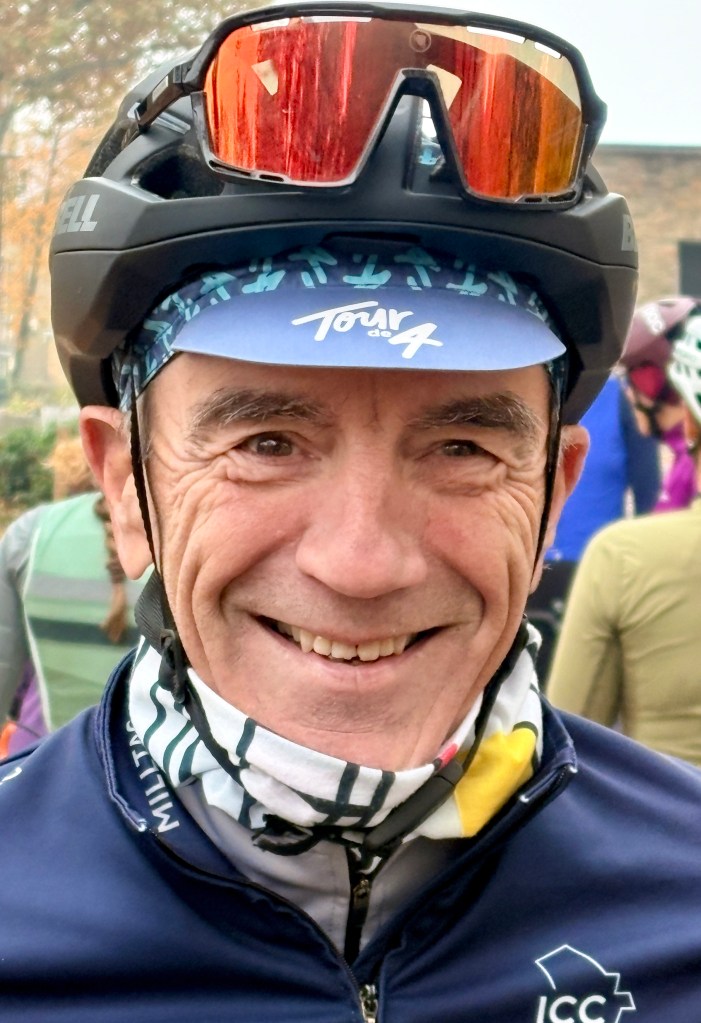
ICC member and volunteer Paul posted a ride with a difference. A tour around London stopping at interesting pieces of Art And Architecture, Sunday 8th November 2026.
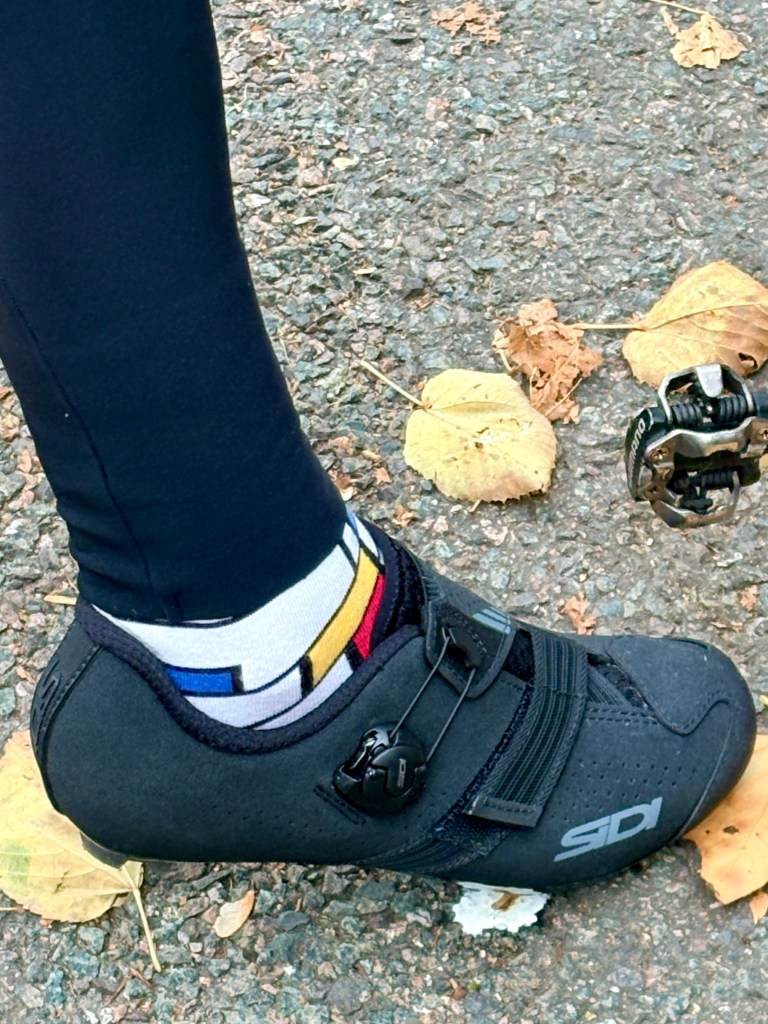
Paul set the tone with his Mondrial buff and socks.
He also provided a little commentary on each piece, reproduced here.
[My comments in square brackets]
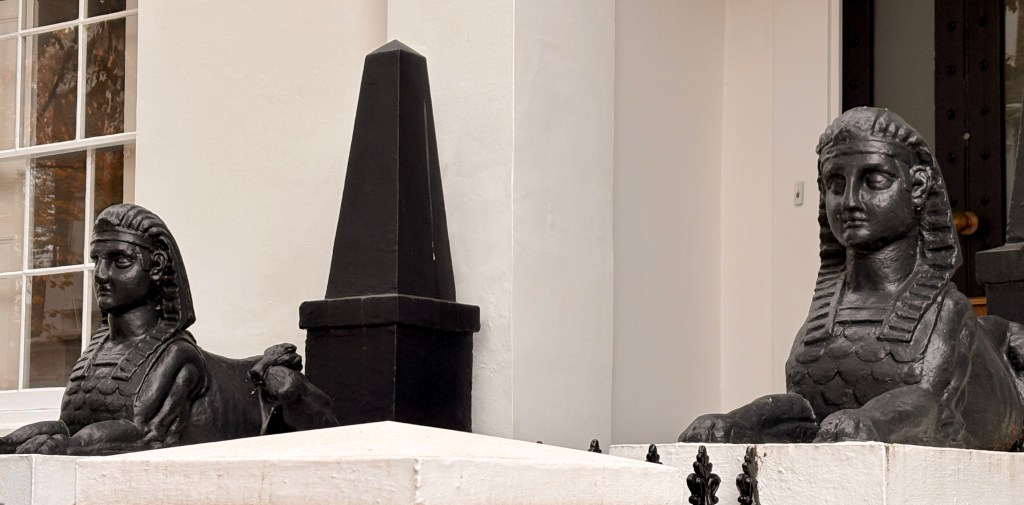
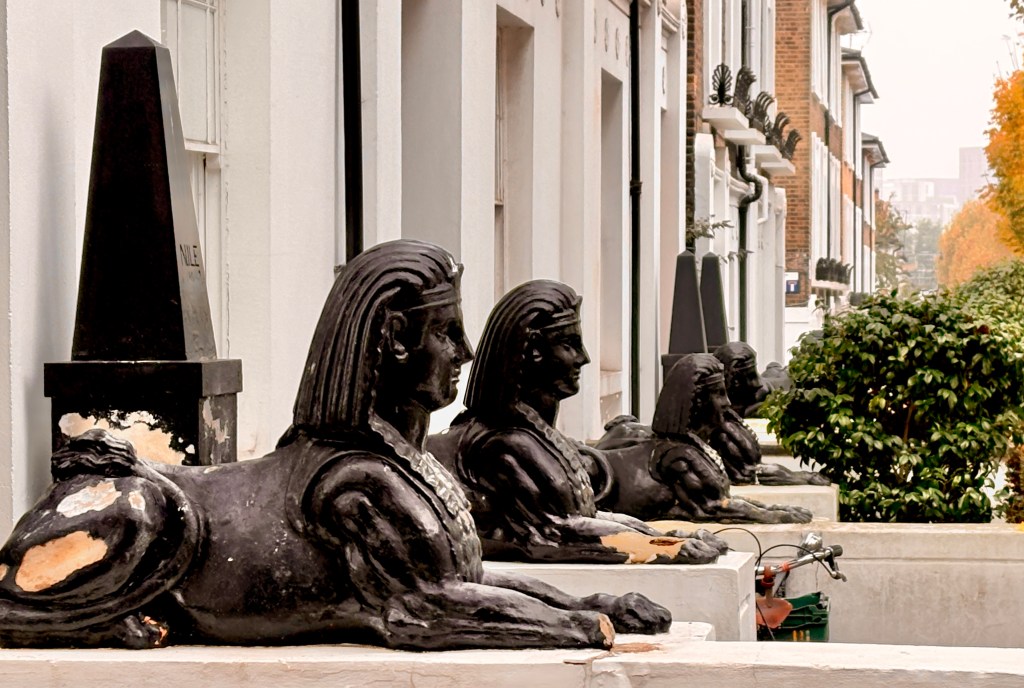
Richmond Avenue, N1 A terrace of posh houses built by Joseph Kay in 1841 which has a remarkable tribute – obelisks and sphinxes – to Admiral Lord Nelson’s victory over the French fleet in the Battle of the Nile in 1798 which gave the Royal Navy supremacy in the Mediterranean for the rest of the Napoleonic War.
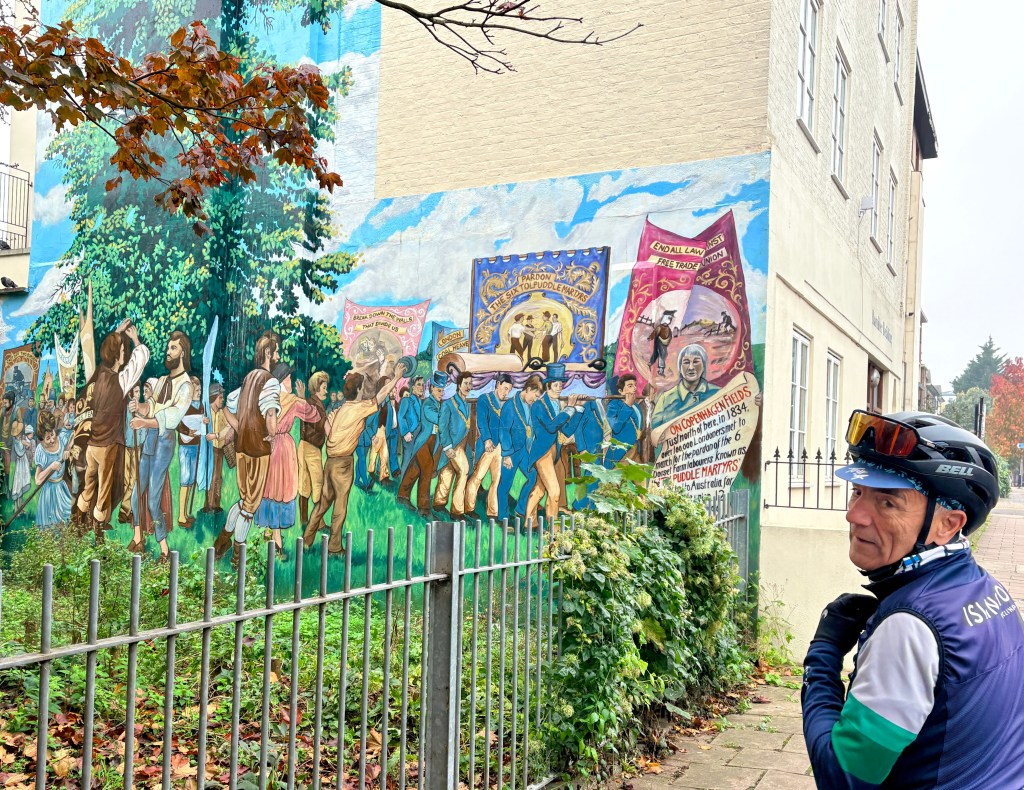
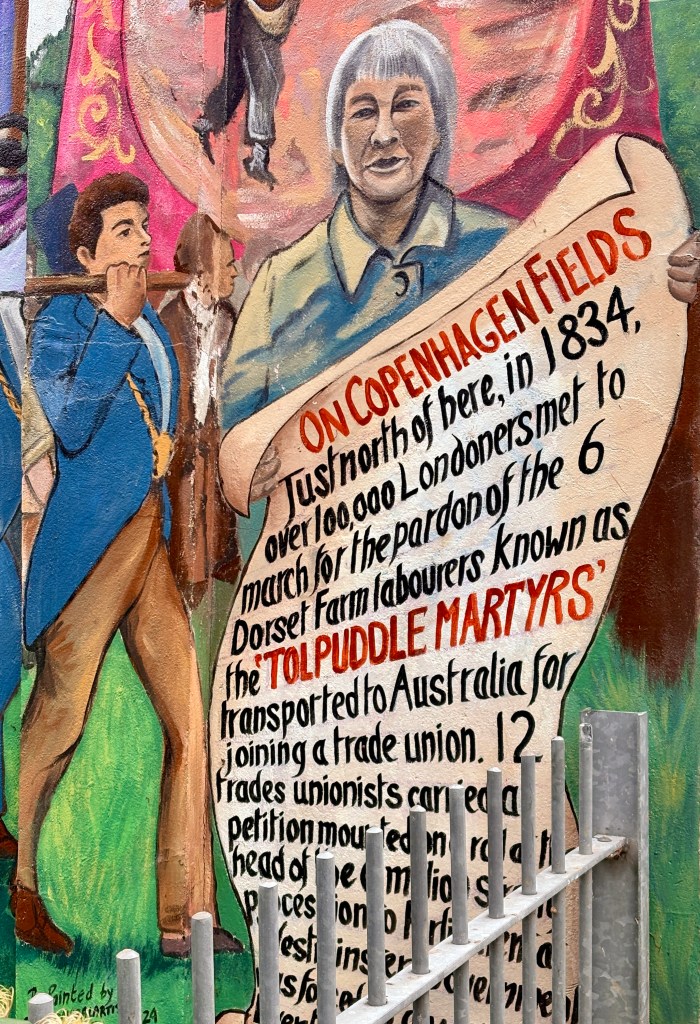
183 Copenhagen St N1 This 40-year-old mural by Dave Bangs commemorates a march in the general direction of Parliament held in support of the Tolpuddle Martyrs, six Dorset farm workers who were deported to Australia in 1834 for the grave crime of joining a trade union.
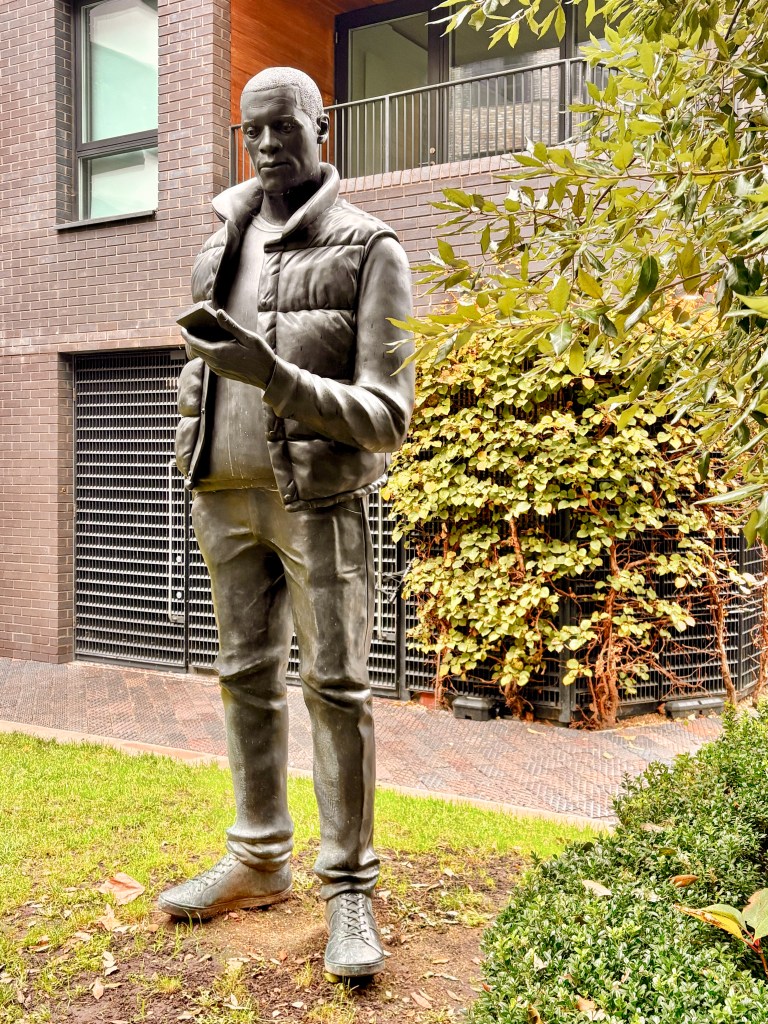
Old Street Yard, EC1 If you like your statues to have presence then Networking by Thomas J. Price is likely to be right up your alley, or courtyard in this case. No plinth, no horse, no obelisk, just a man in a puffa getting it done.
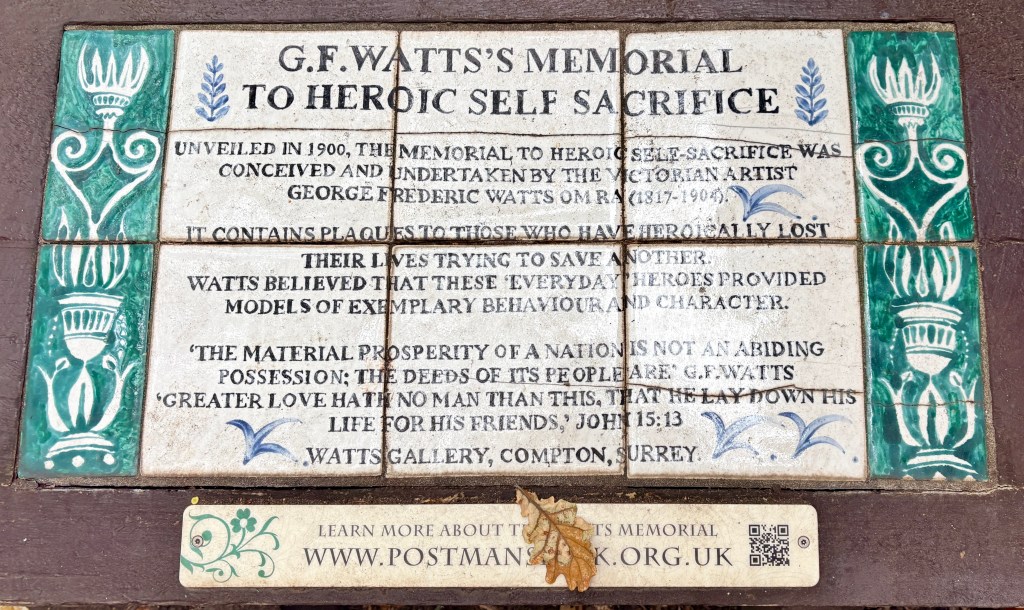
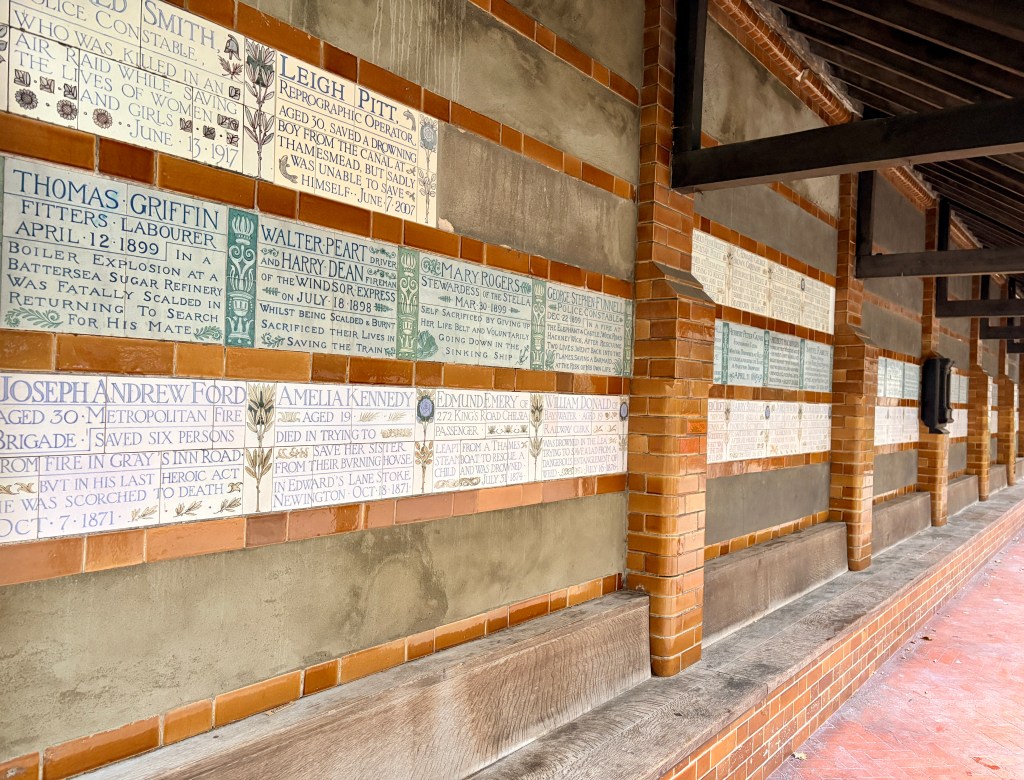
King Edward Street EC1 George Frederick Watts built this tiled memorial to people who died attempting to save someone else. It gets the name Postman’s Park because of a once nearby sorting office and an influx of posties at lunchtime.
[This is my favourite park in London. A little gem that humbles me every time I visit.]
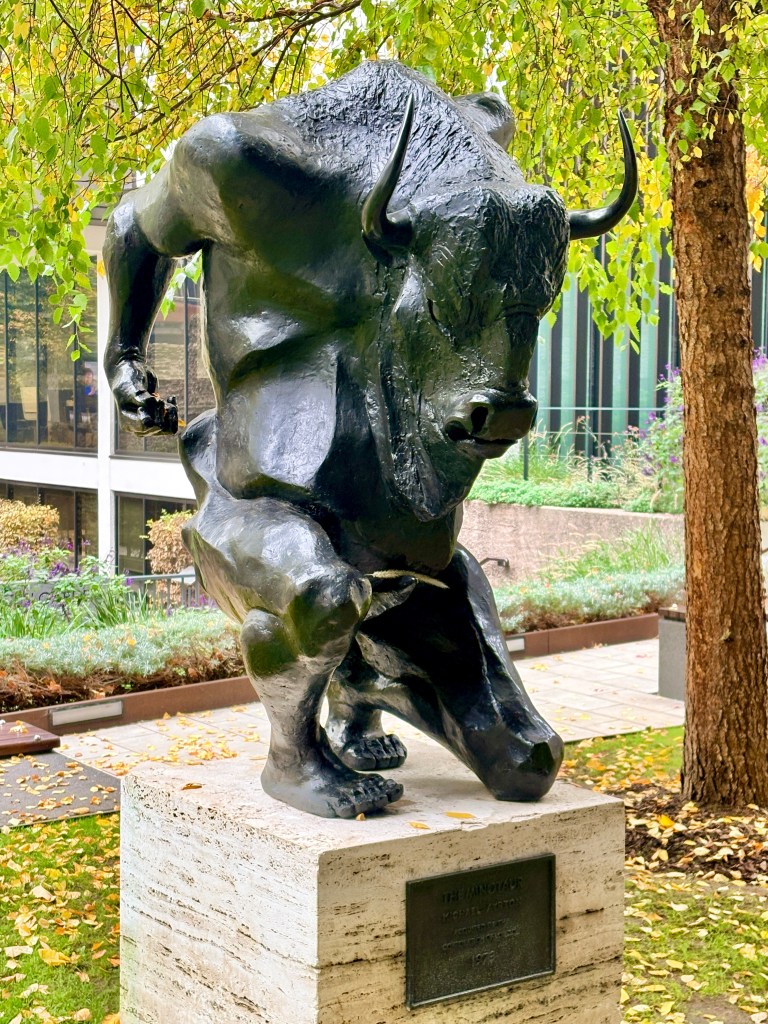
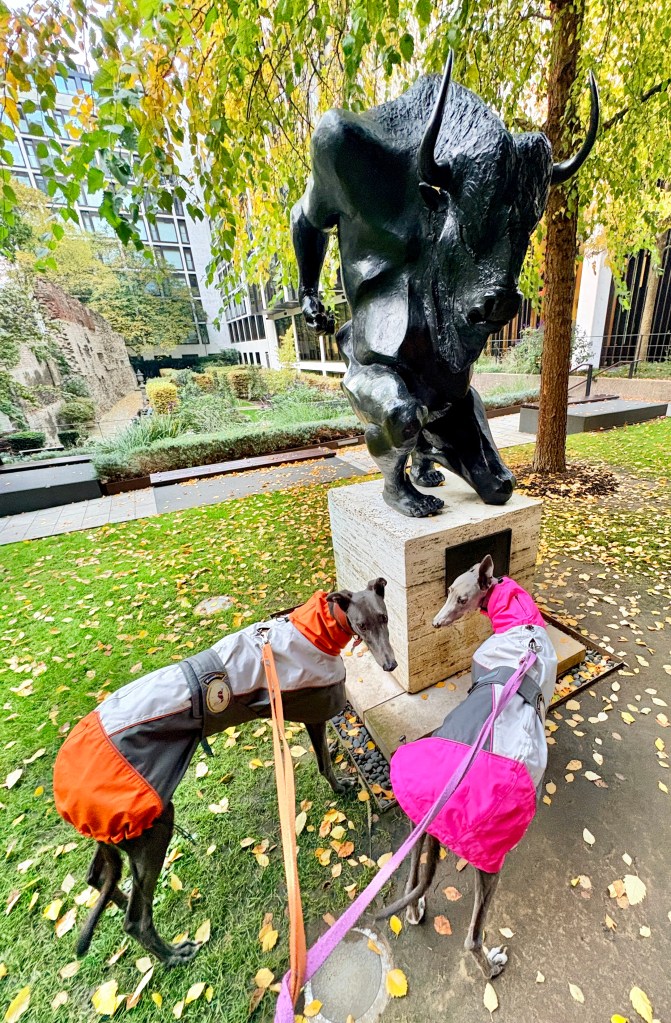
London Wall EC2 Half-man, half-bull Richard Ayrton’s The Minotaur looks like a finely-tuned sprinter ready to flatten onlookers at the earliest opportunity. A coiled spring of a statue.
[This statue is on one of our regular walks with the dogs, as witnessed by the photo taken the following day. This time without the piece of grass balanced on a particular part of the piece.]
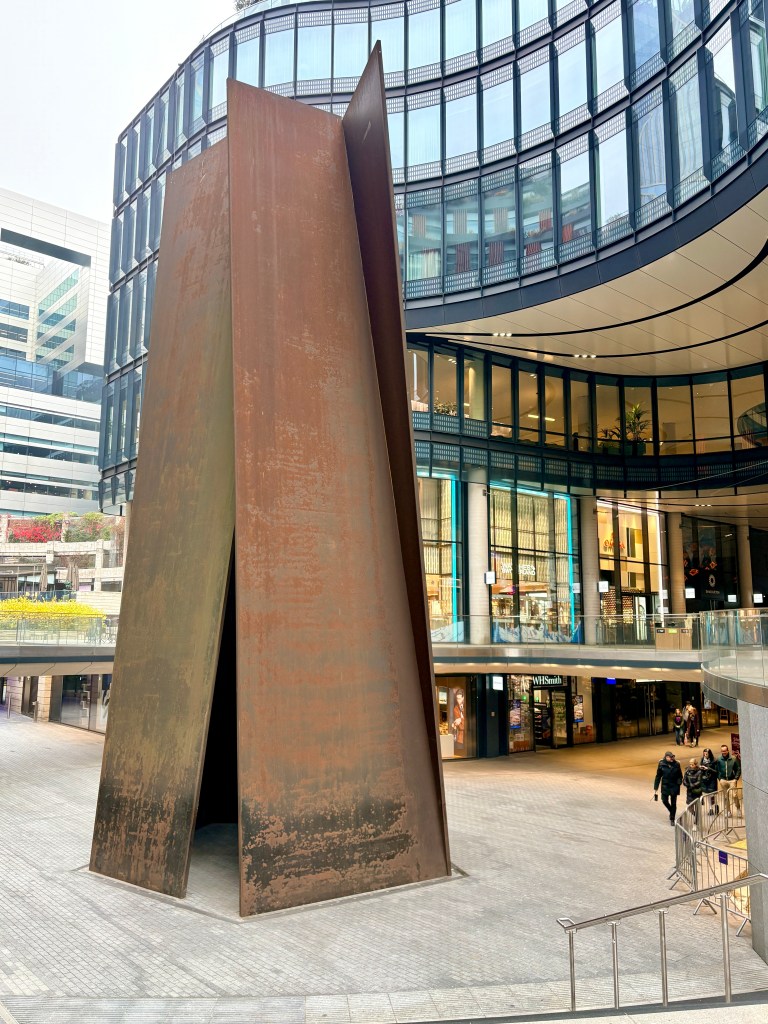
22 Eldon Street, EC2 It’s hard to work out how Richard Serra’s enormous weathered steel plates Fulcrum remains upright. It’s not helped by knowing that another of his constructions did fall over and killed a spectator. Observe carefully.
[This is a few hundred metres from where we live. I can assure you they have learnt their lesson and have welded the pieces together]
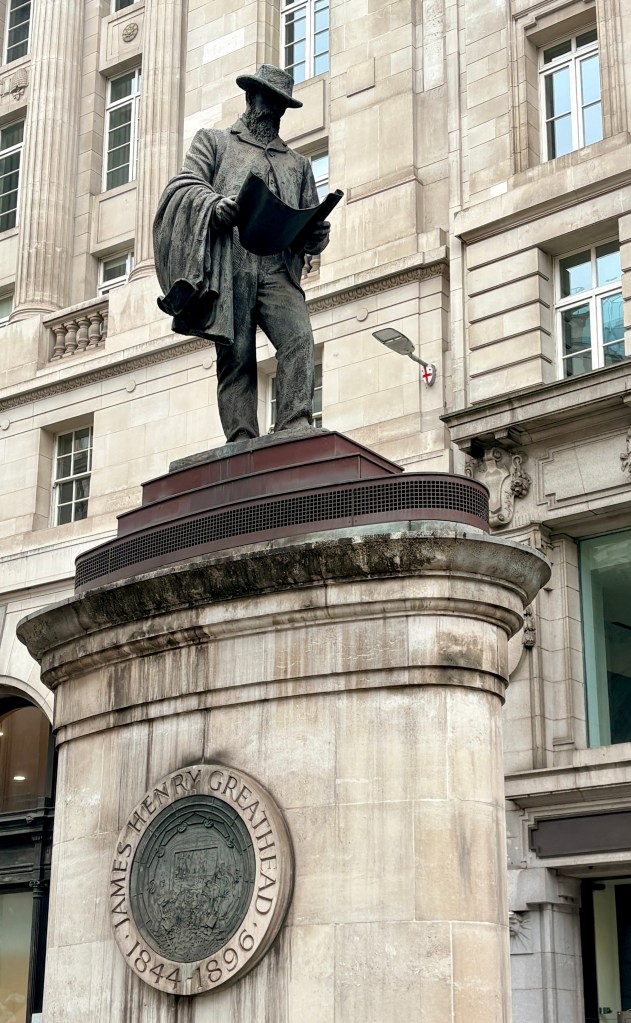
Cornhill, EC3 There aren’t many older statues of commoners in London but this one is of John Henry Greathead, chief engineer of the City and South London Railway who invented the travelling shield, a drilling technique used to cut the deep tunnels of the London Underground. The statue is, fittingly, also a ventilation shaft.
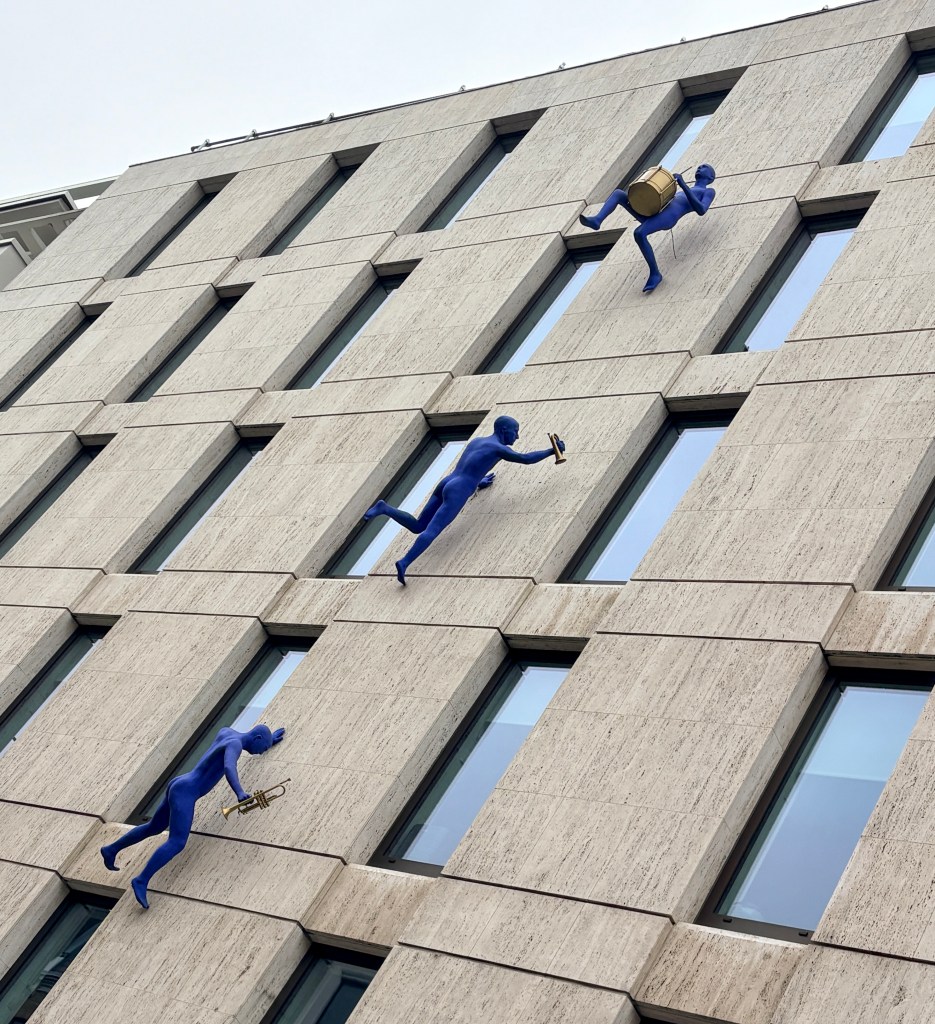
134, Borough High St SE1 A nondescript office block with a Costa and a tanning shop at ground level. But look up and I guarantee Yves Klein’s Blue Sky Players will leave you smiling for the rest of this ride and quite a lot longer.
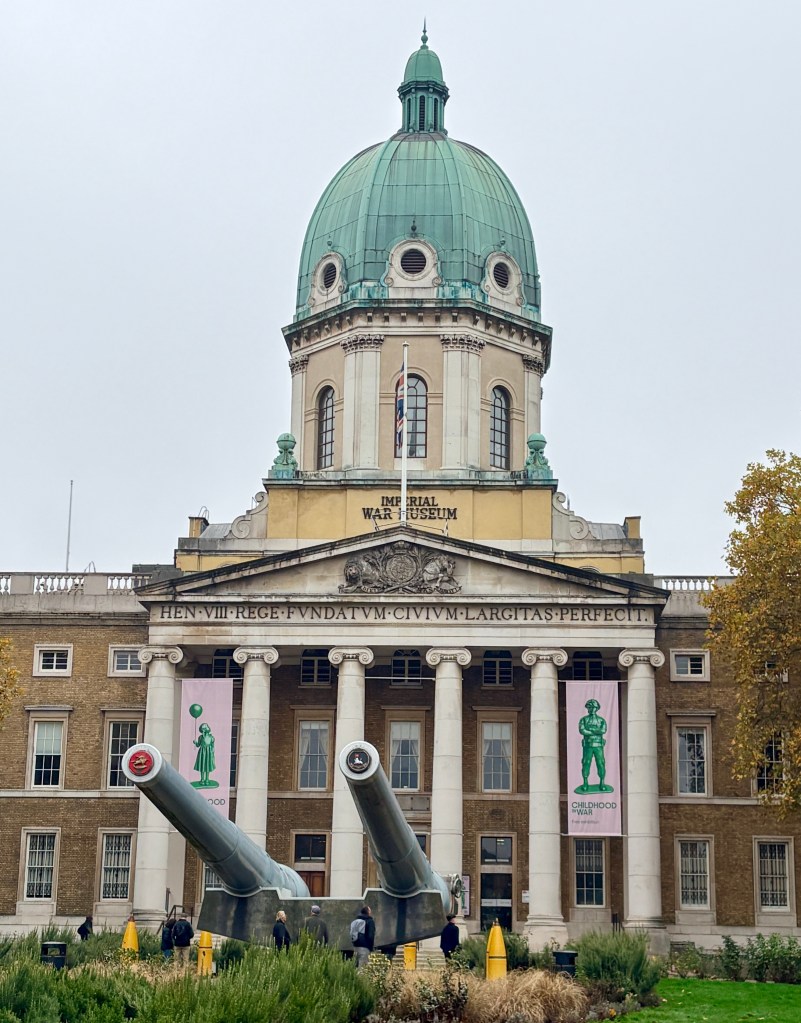
Lambeth Road, SE1 The two guns outside the Imperial War Museum were designed in 1912 and come from two separate ships, HMS Ramilies and HMS Resolution. Each barrel weighs around 100 tons and could fire a shell weighing 1 ton a distance of of 30 kilometres. In their current orientation they could take out Scratchwood Service Station on the M1. This may or may not be a good thing.
[The same is said about the guns on HMS Belfast, moored on the Thames near Tower Bridge. What is it about Scratchwood Services the military don’t like?]
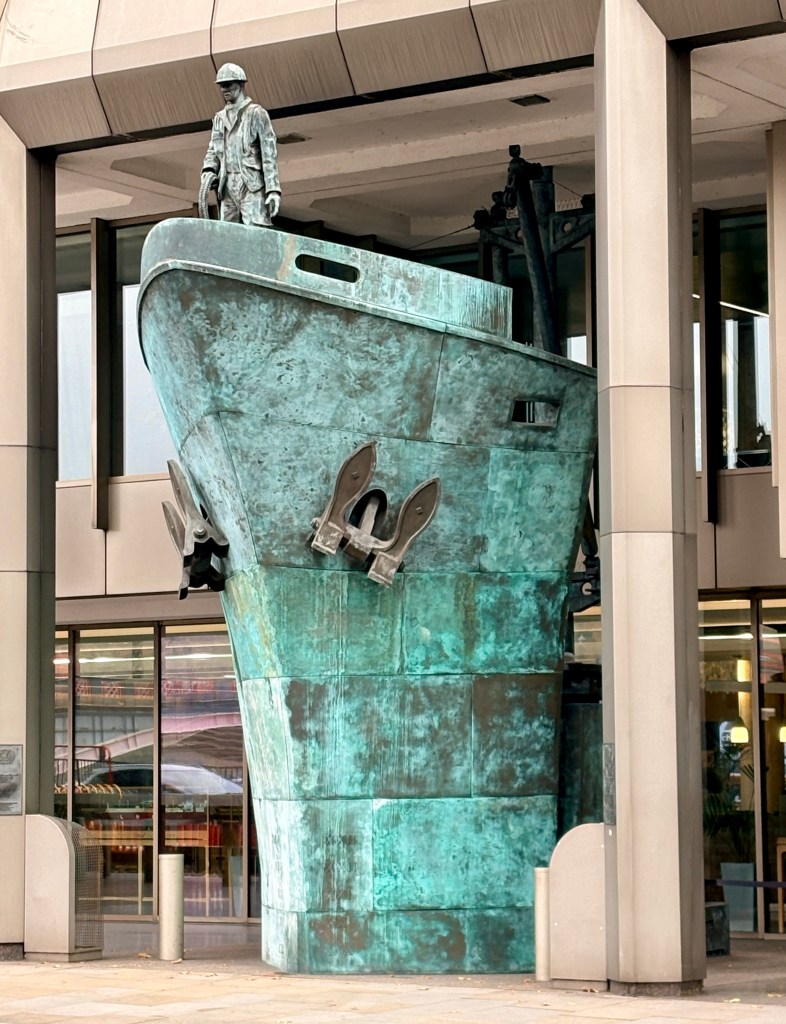
Albert Embankment SE1 I’d like to have been in the meeting at the International Maritime Organisation when someone said ‘Well, how shall we show the world where we are and what we’re all about?’ Genius.
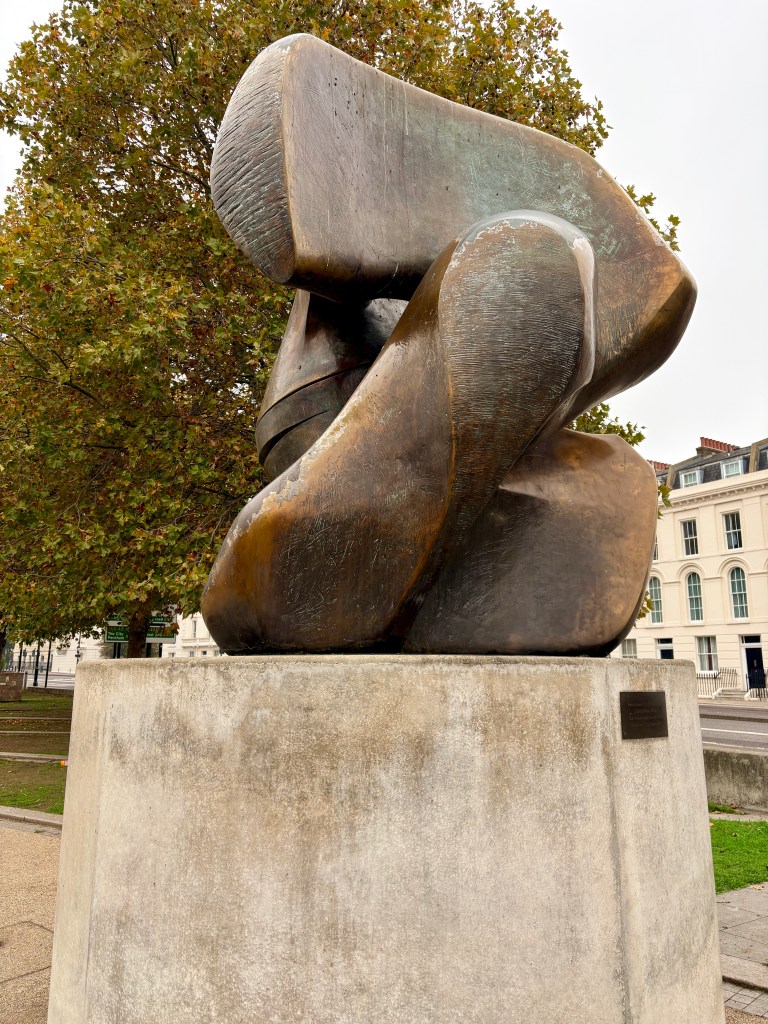
Riverside Walk Gardens, Millbank, SW1 A Henry Moore on full display. Locking Piece is typical of his work – monumental, thoughtful and playful at the same time.
Battersea Park, SW11 This memorial to First World War dead by Official War Artist Eric Kennington, himself invalided out of the army in 1915, shows three infantrymen from the 24th Division. Known as The Trouserless Tommies, the statue conceals a secret. The broken-nosed figure on the left went on to become the finest writer and poet of his generation. Eric Kennington also served as a War Artist in WWII.
[The statues left, on the right in this photo]
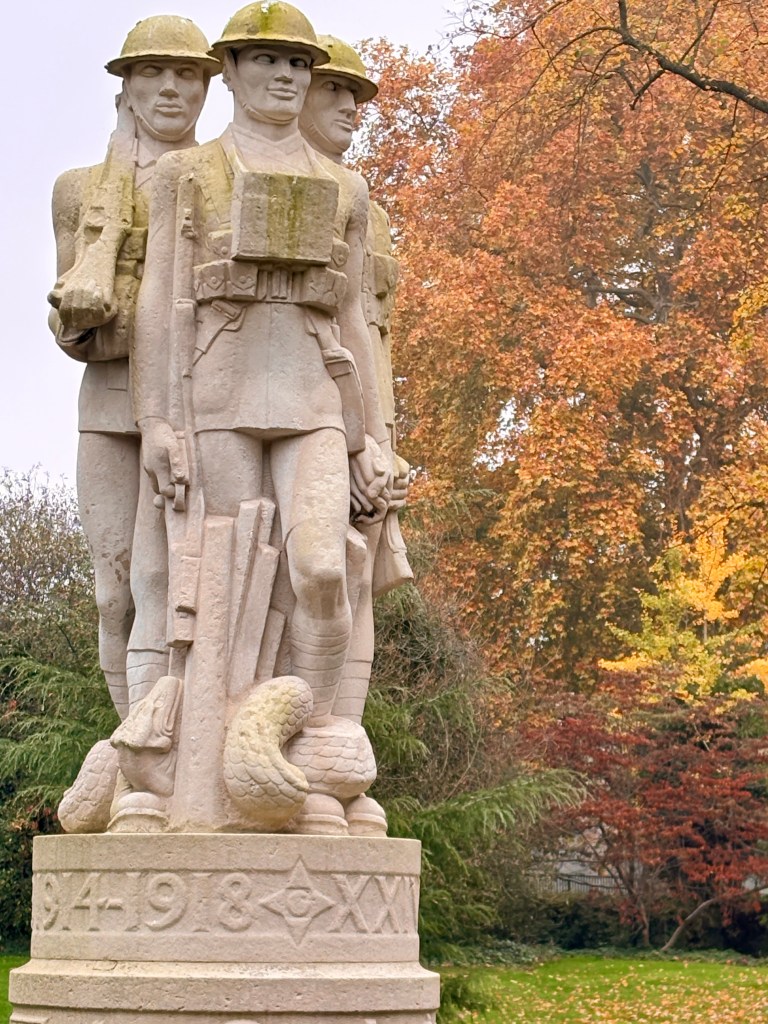
[We stopped for coffee, bacon rolls and cake at the Café in the park. As it was Rememberance Sunday we finished in time to stand outside observing the two minute silence at 11:00. Lest we forget]
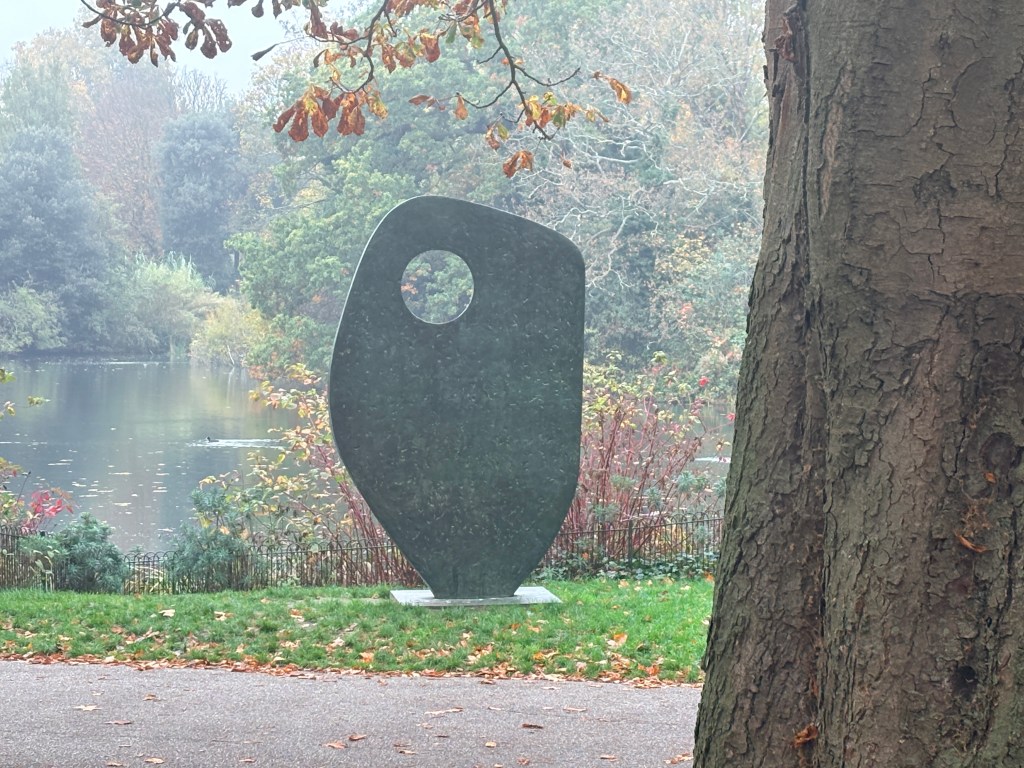
Battersea Park, SW11 Confusingly, Barbara Hepworth’s sculpture Single Form has a double. It’s outside the United Nations building in New York as a tribute to one of Hepworth’s friends, Dag Hammerskjold, the second Secretary-General of the UN, who died in a plane crash.
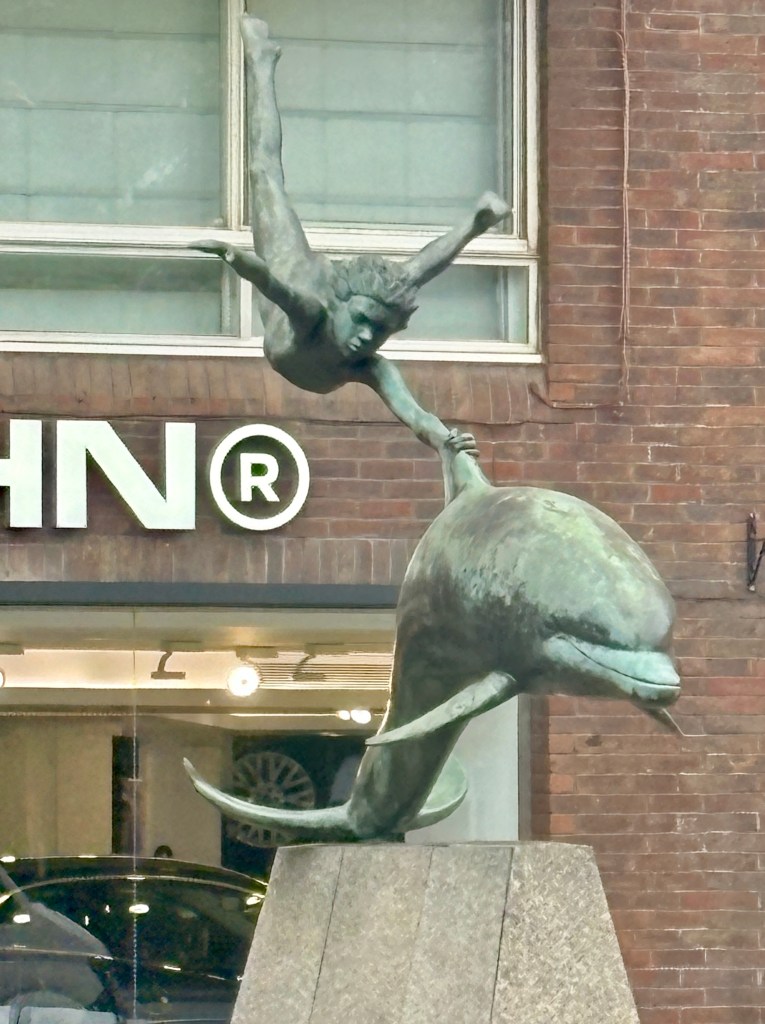
Albert Bridge, SW11 Boy With a Dolphin is at Albert Bridge. It was made in 1974 by David Wynne (1926-2014), who also sculpted The Beatles. Wynne’s son, Roland, posed for the Boy. There’s a companion piece, Girl With a Dolphin (1973) at Tower Bridge.
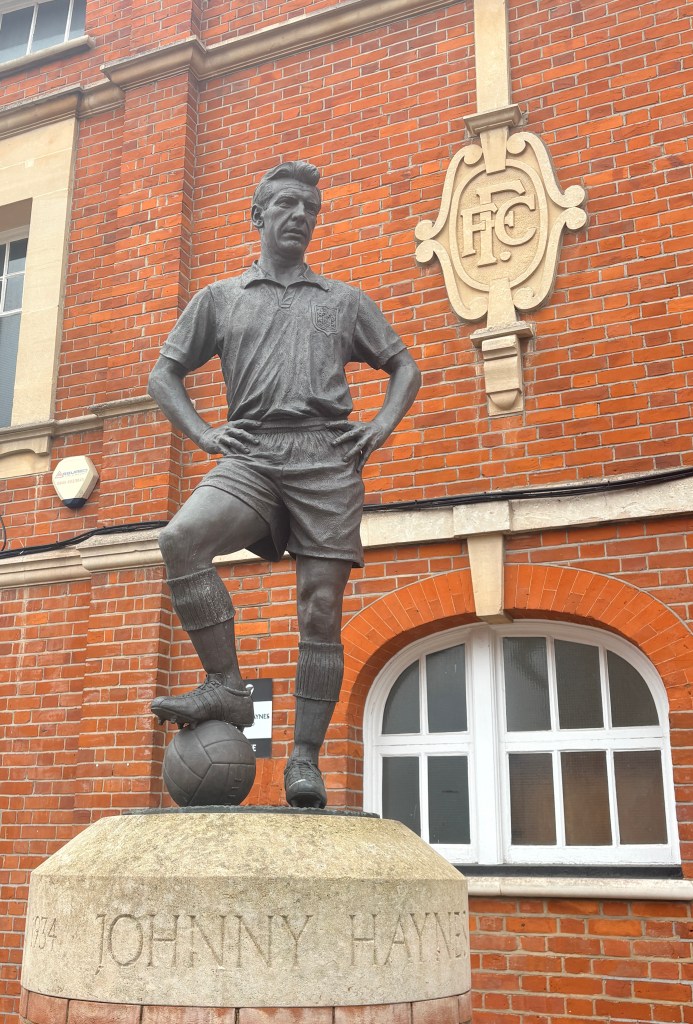
Craven Cottage, SW6 Footballers’ statues can be difficult – just ask CR7. But this one of Fulham and England inside forward Johnny Haynes is an absolute classic. In 1961 Haynes was the first professional to break the FA salary cap of £20 a week to become Britain’s first £100 a week player. How times have changed.
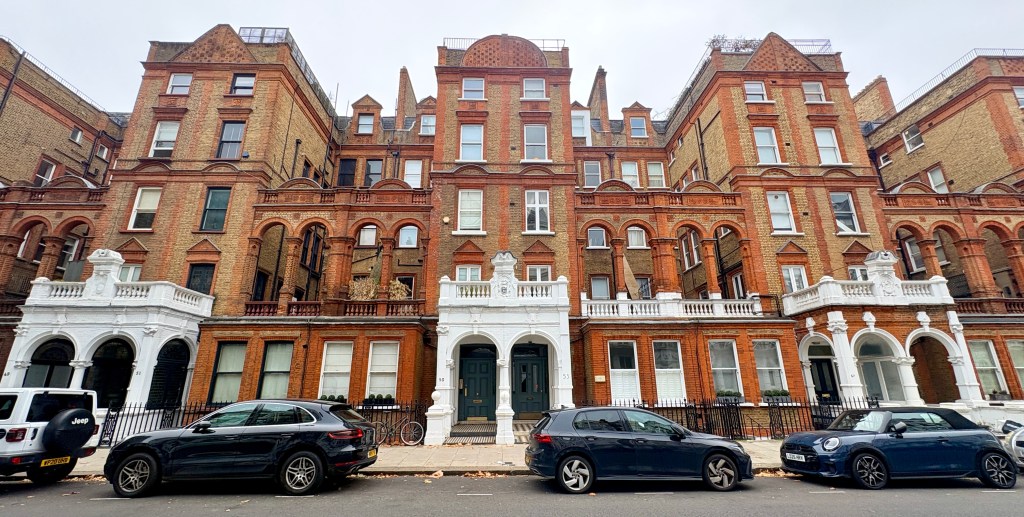
Harrington Gardens, SW7 Built for ‘successful artistic types’ following the development of the area after the Great Exhibition of 1851 these fine houses, designed by Sir Ernest George of architects George and Peto, are based on gabled houses in Ghent, Belgium. In 1883 WS Gilbert, the librettist to Sullivan’s composer, and his wife Lucy, moved in to Number 39.
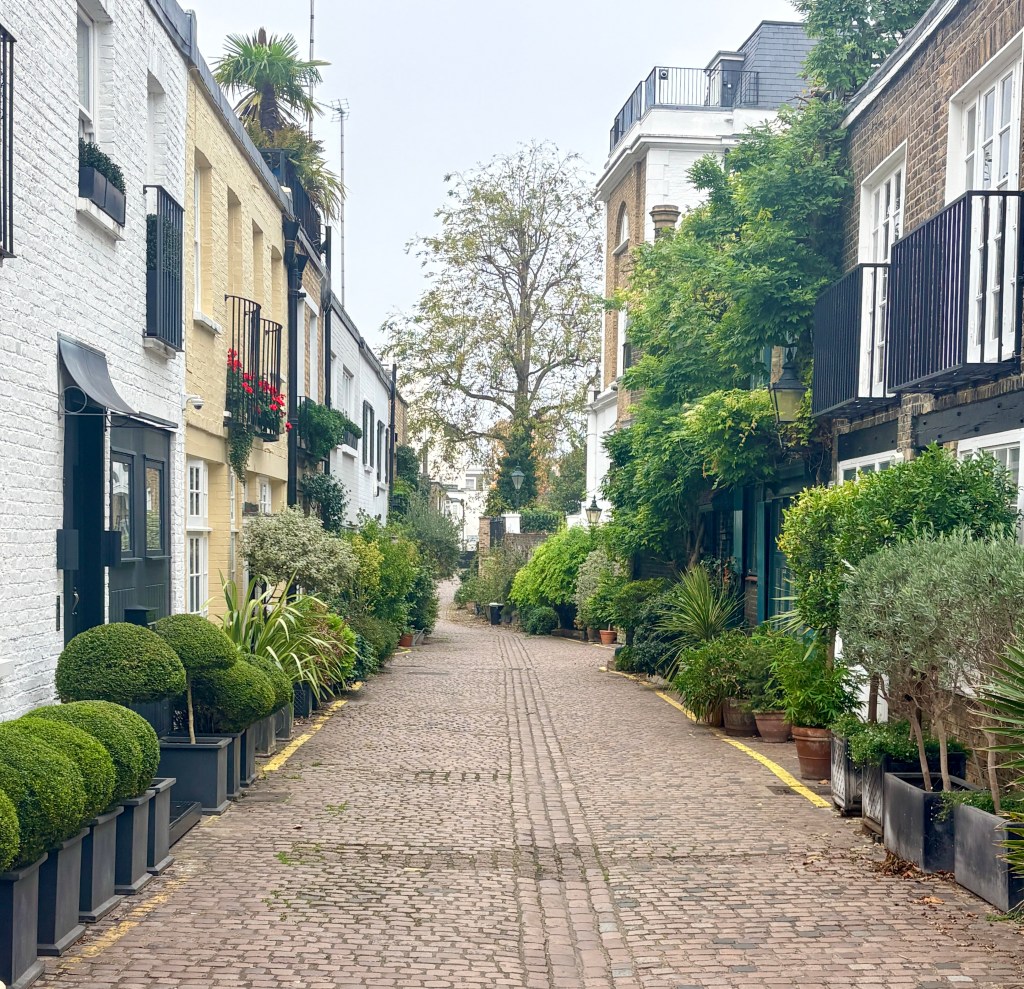
Kynance Mews, SW7 A picturesque, highly photographed 19th-century cobblestone street featuring historic Grade II-listed stone arches and charming ivy- and wisteria-covered homes. Originally built as stables between 1862 and 1879, it now serves as a quiet residential enclave.
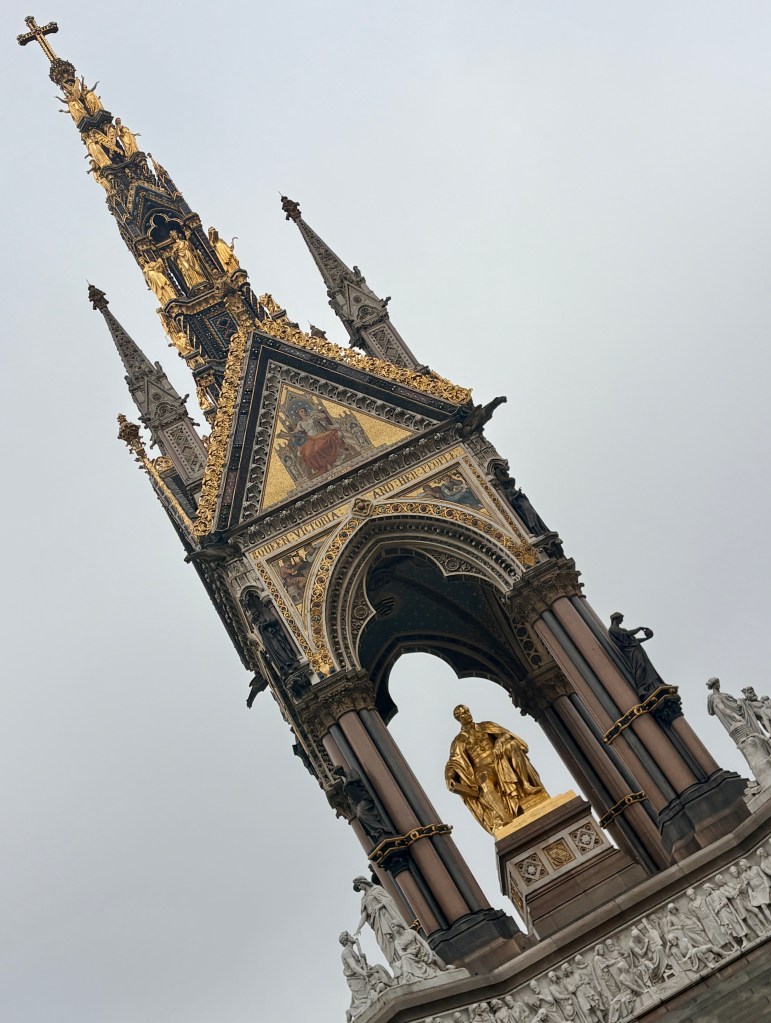
Albert Memorial, Kensington Gardens, SW2 The Memorial commemorates the death of Prince Albert, Queen Victoria’s husband, who died of typhoid fever aged 42 in 1861. Designed by George Gilbert Scott, amidst the high-Gothic Victoriana embellishments, you may be able to see that Albert is holding a catalogue for the Great Exhibition of 1851, the first World’s Fair, held in Joseph Paxton’s glittering steel and glass, Crystal Palace. After the Exhibition the entire building was moved to South London. It burnt to the ground in 1936.
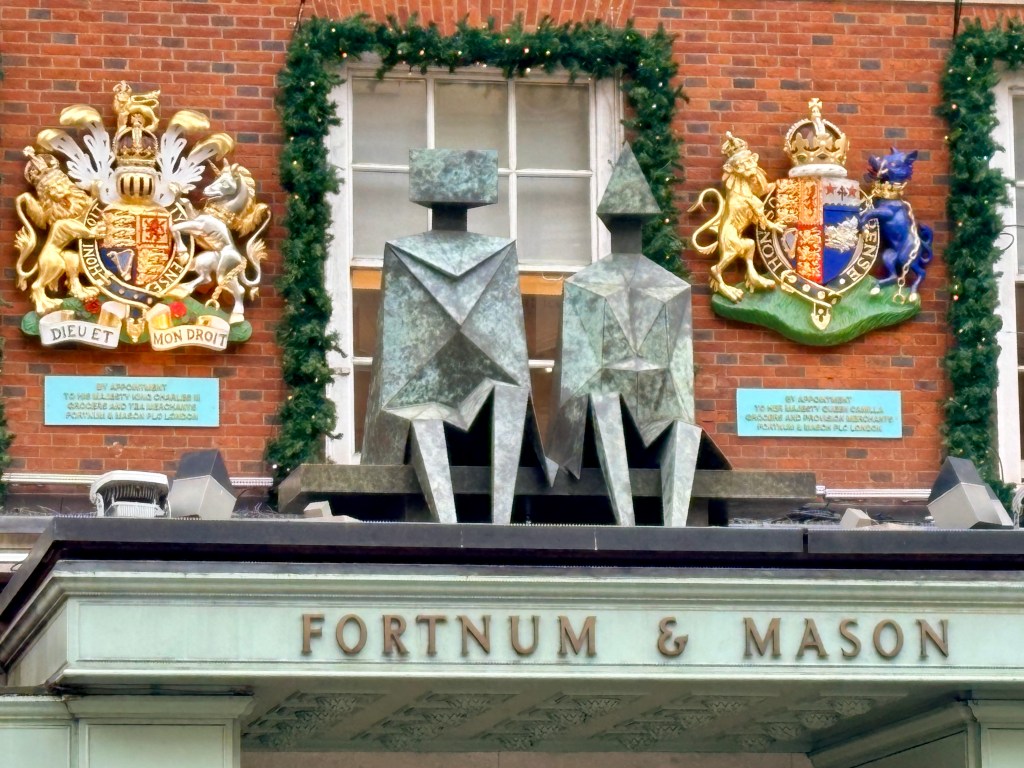
Fortnum and Mason, 181 Piccadilly Two treats here, but only if your timing is right. Best viewed from the Royal Academy side of Piccadilly the bronze King and Queen figures by Lynn Chadwick seated below the ‘cuckoo clock’ are remarkable enough. But on the hour all hell breaks loose as two more figures emerge from the gilded boxes above.
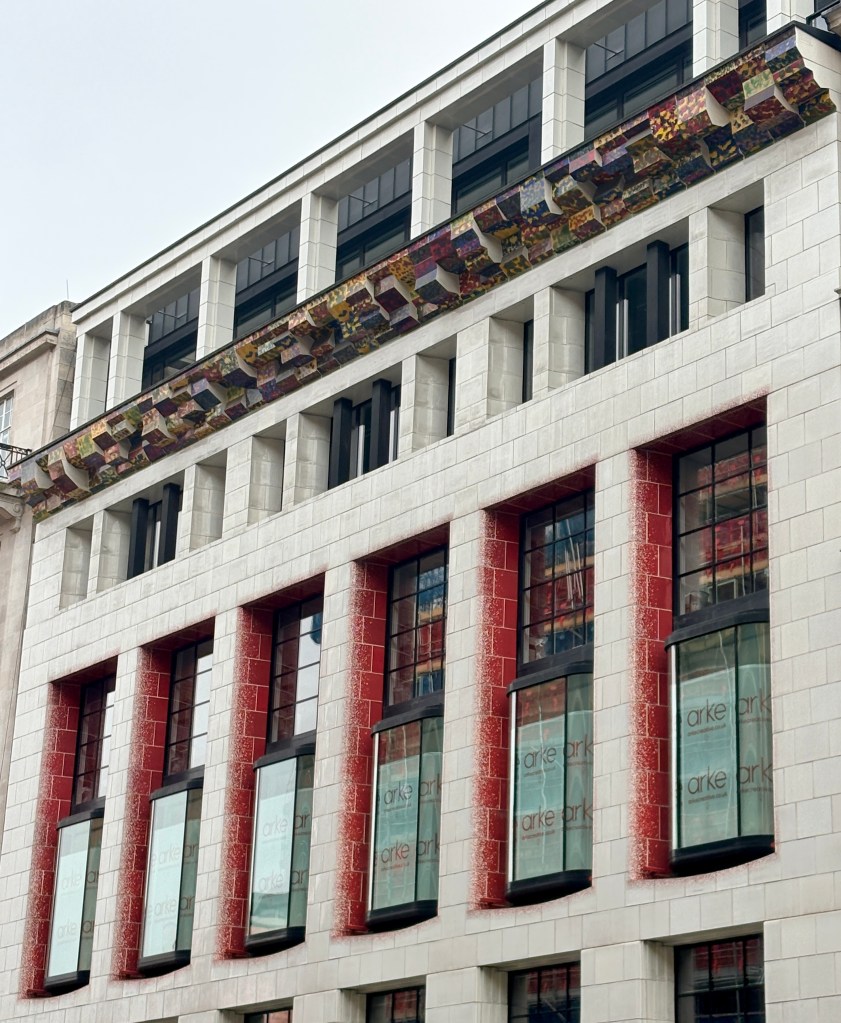
214 Piccadilly The ground floor shops – Shackelton and Arcteryx – contain some of the most expensive outdoor gear known to man – more on this in a moment. But look up for a free treat. British sculptor Richard Deacon has given the first floor windows a dusting of red and the cornice a complete colour explosion.
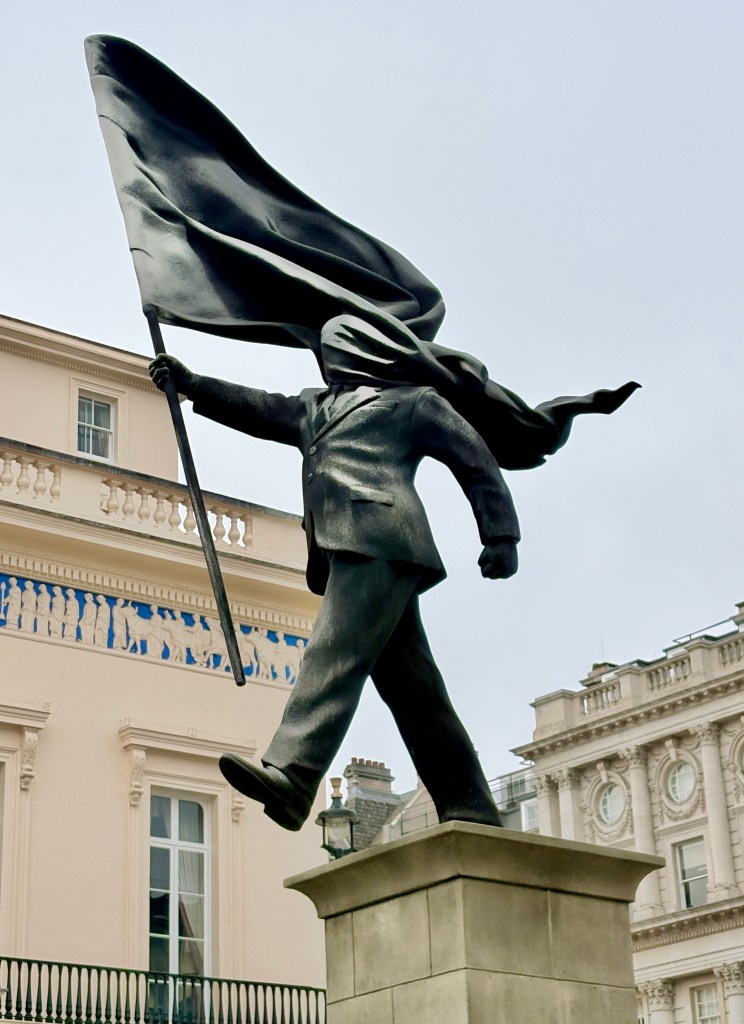
Waterloo Place, SW1 Flying the Flag – another of Banksy’s mysterious installations – that looks as if it’s been there forever but makes a striking commentary on the present. But while you wonder how he did it ….
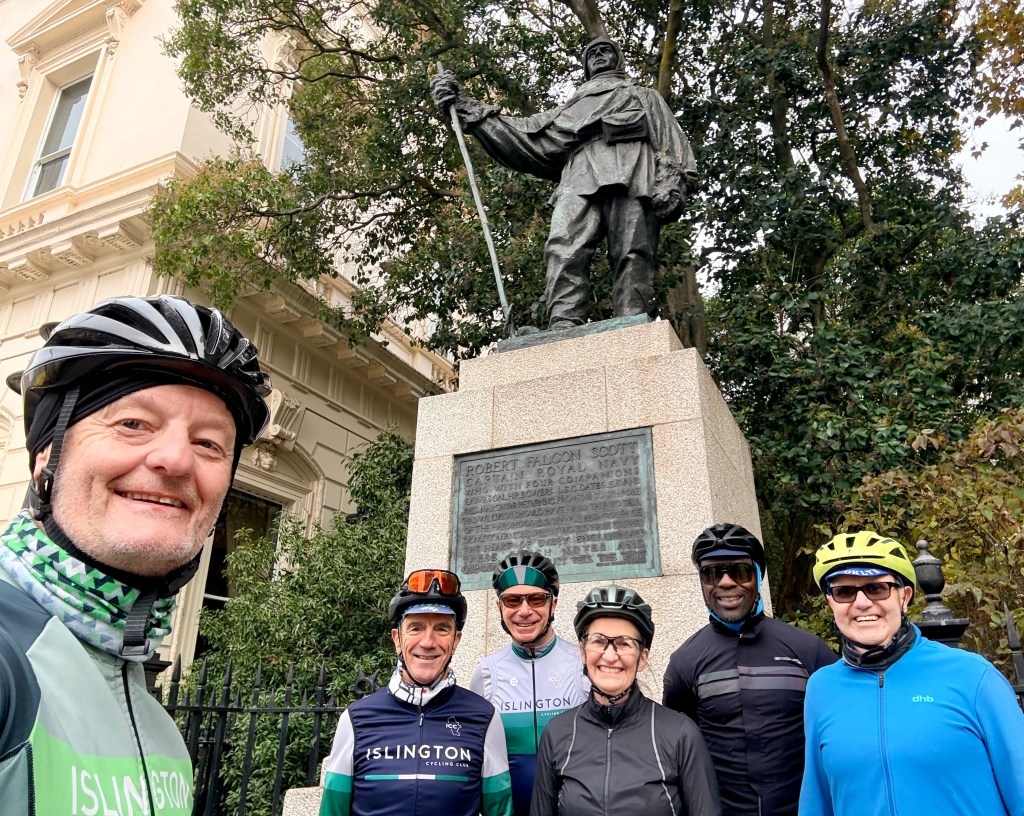
Waterloo Place, SW1 …. take a look over your shoulder at my favourite statue in London, Robert Falcon Scott, Scott of the Antarctic. Sculpted by his widow, Kathleen, Scott wears his bulky polar gear and strikes a pose more stoic than heroic – and all the more tragic for that. The plaque lists the four colleagues who perished with him on their return from the South Pole in 1912, having been beaten to the pole by Amundsen, and a quote from his diaries. I’d like to think that the folds of the oilskins have been reverentially referenced by the Banksy.
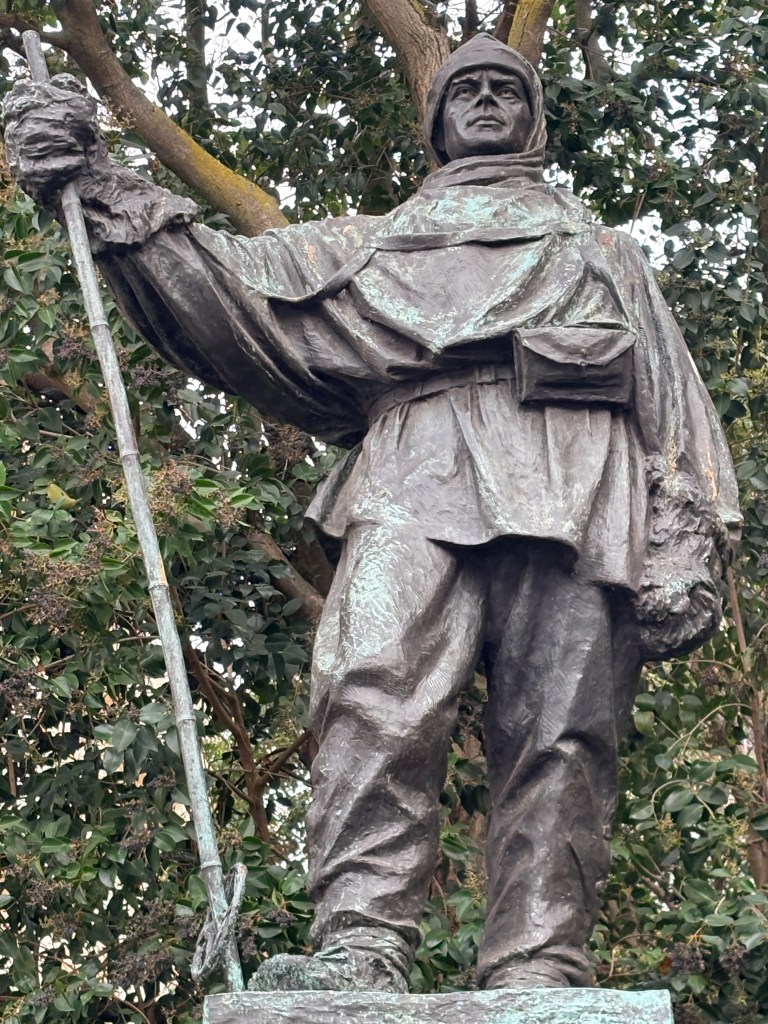
[As it was Paul’s favourite statue he chose it for the team photo]
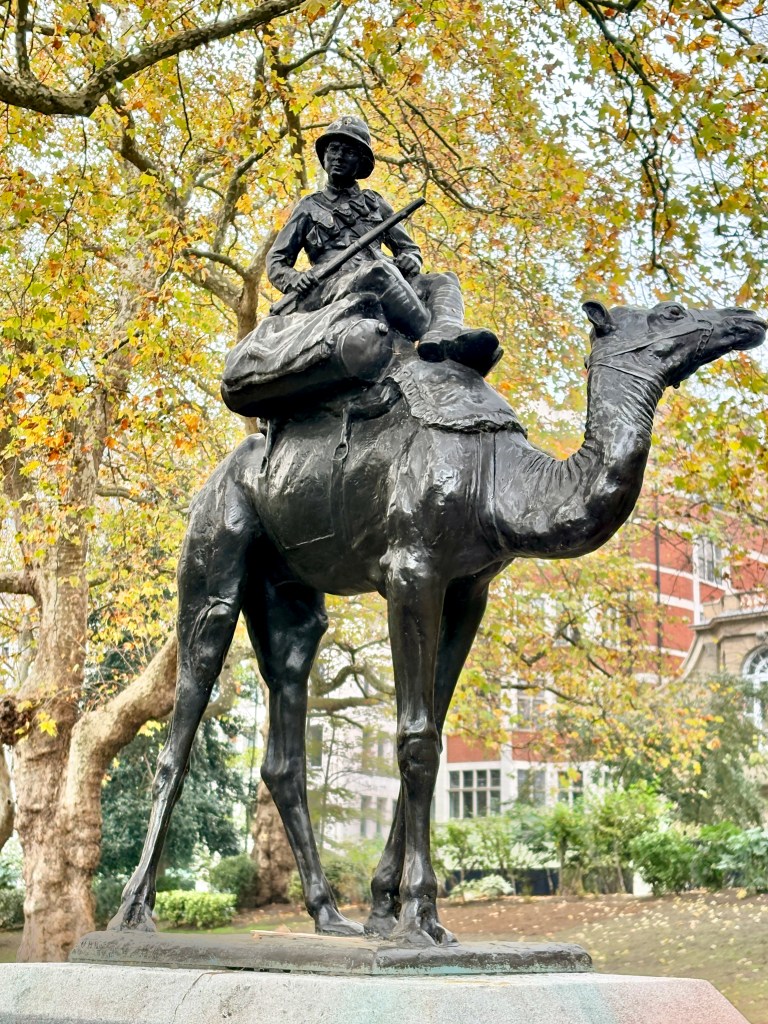
Victoria Embankment Gardens, WC2 The gardens contain a number of huge statues, including Robert Burns, but we’re looking for one of the smallest. This memorial to WW1’s Camel Corps, reveals a finely sculpted camel it’s neck twisting in the vague direction of nearby Cleopatra’s Needle, complete with an insouciantly armed member of the Corps.
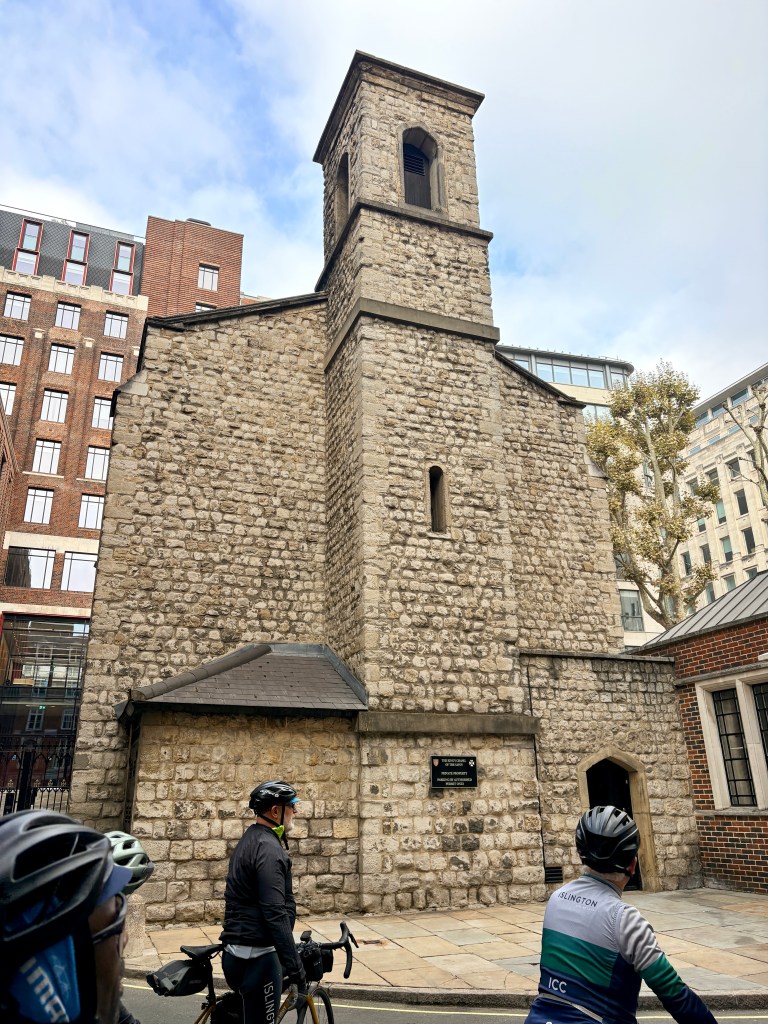
Savoy Hill, WC2 The Savoy Church was built in the early 1500’s on the site of John of Gaunt’s Savoy Palace, which was torn down in the Peasants Revolt of 1381. Henry VII built a hospital here and the Church was part of it. The chapel is owned by the Duchy of Lancaster and is a Royal Peculiar.
Floral Street, WC2 Connecting the Royal Opera House and the ballet school this bridge designed by the Wilkinson Eyre partnership looks like the love child of a Mobius strip and a twisted accordion. Joyful.
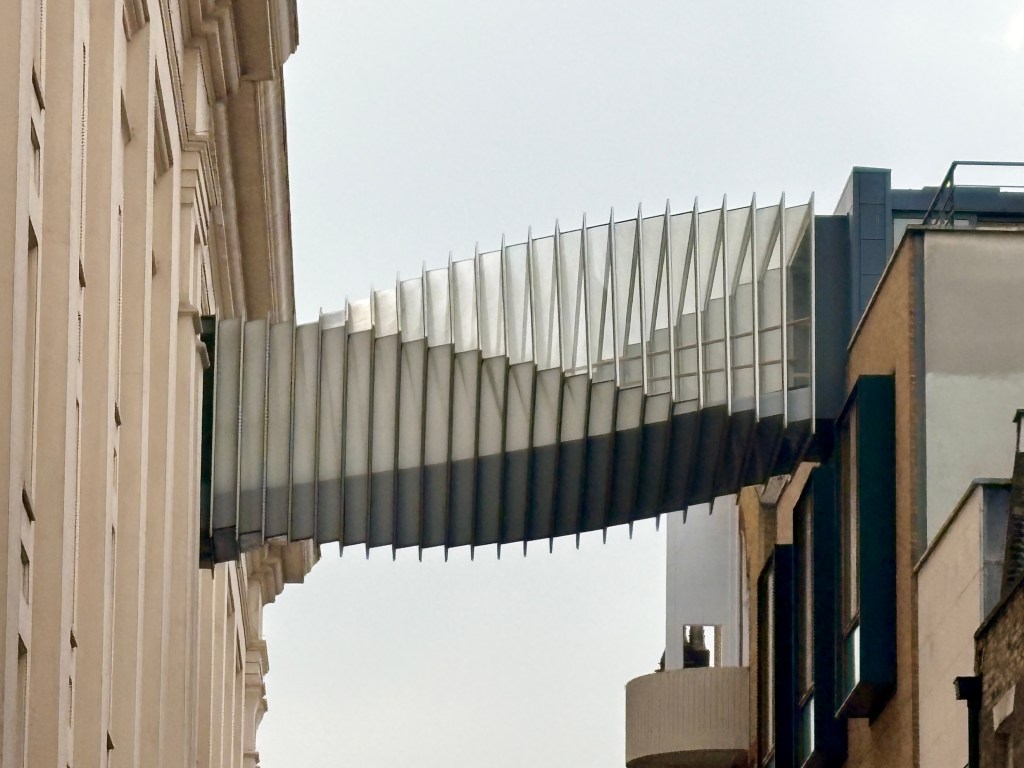
At this point I had to head home. Paul’s ride carried on to see the final three AAAs. A real shame as I really enjoyed the ride.
A huge thank you to Paul for organising and leading such a great ride. And thank you to Alex, David C, David M, Jyde, Kate and Mike for the company.
During the pandemic I started a trend of mapping out borders on Strava. I started with The London Borough of Islington, then did the City of London and the Congestion Charge zone. I’m thinking of creating rides for ICC using these routes with Fun Facts along the way. I paln to run them when the warmer weather returns so that I won’t have to keep taking my winter gloves off and on at every stop.
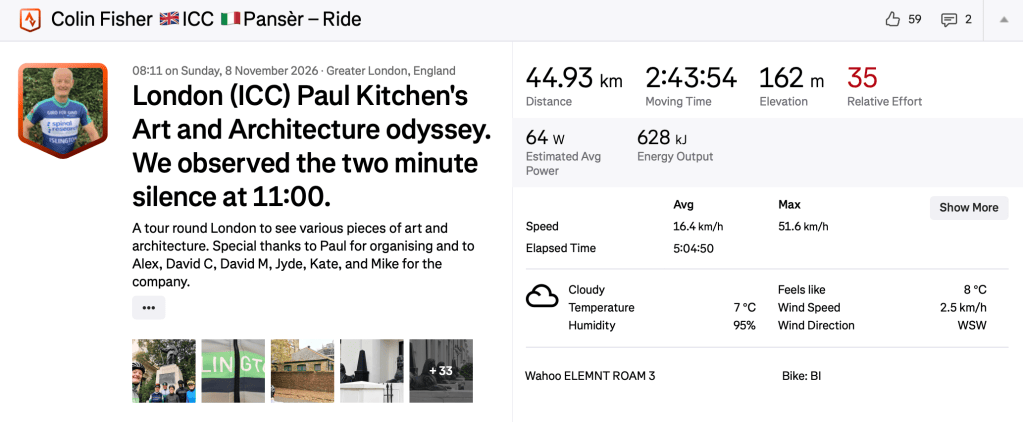
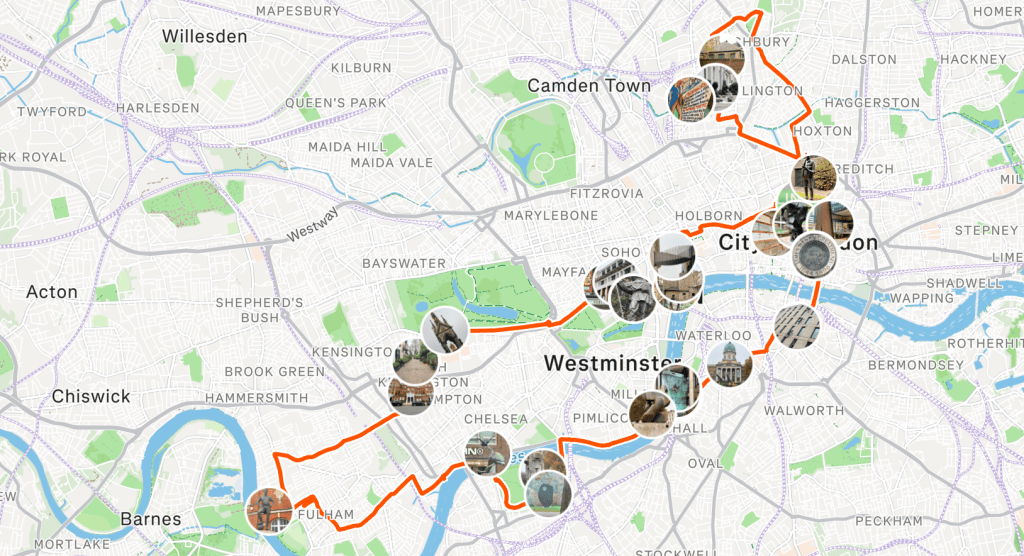


Now that’s a really interesting one.
LikeLiked by 1 person
Glad you liked it. Hopefully the ones I’m
planning for next year will be as interesting.
LikeLike